Discover how storm balancing tanks work and how they play a crucial role in wastewater management operations.
Wastewater management systems are precise operations, meaning surges in supply can cause significant difficulties, including forced storm overflows. However, new investments and technologies are helping water authorities tackle the problem, and storm balancing tanks are a key part of these investments.
Discover the technology behind storm balancing tanks and different ways storm balancing can be utilised to help water companies manage their systems during peak periods.
What are Storm Balancing Tanks?
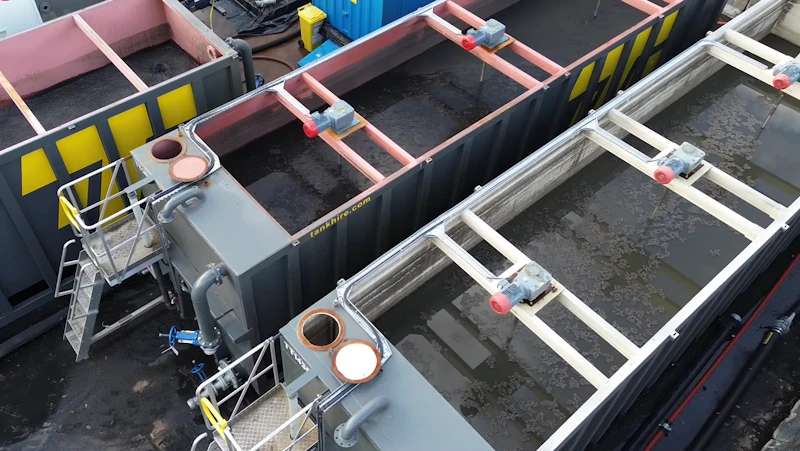
A stormwater balancing tank, also called a detention or attenuation tank, is a structure designed to control the flow of wastewater as part of the treatment process. It does this by holding and restricting the flow of excess wastewater during peak periods, then allowing the stored wastewater to flow during quieter periods.
Storm attenuation tanks can come in many shapes and sizes, including above and below-ground structures and temporary tanks for periods of high demand.
Featured
The Benefits of Using Temporary Wastewater Solutions
Temporary wastewater management tanks can help you avoid downtimes and meet short-term demand quickly and with more flexibility.
The Role of Balancing Tanks in Wastewater Treatment
Storm balancing tanks play a crucial role in supporting wastewater treatment plants as they seek to combat some of the biggest issues facing the sector, particularly sewage spills.
The issue of storm overflows in the UK wastewater system has been well publicised. Due to a combination of archaic sewage infrastructure, increasingly extreme weather and growing populations, the amount of pressure being put on wastewater treatment plants is higher than ever.
Storm overflows are designed to ensure wastewater management systems can cope and avoid sewage returning into homes and streets. However, these sewage spills can also cause environmental problems. While the number of yearly storm overflows is generally decreasing, there is increasing pressure to reduce the total further and faster.
Because there are many causes, there are also multiple solutions to managing storm overflows, including sustainable drainage systems (SUDs) such as wetlands and infiltration basins.
Storm balancing tanks can also play a crucial role in ensuring overflows are minimised, as they are specifically engineered to deal with problems of excess demand. Instead of treatment plants having to release into overflows during peak periods, a balancing tank can hold onto the excess and release it when demand stabilises, minimising sewage spills.
By combining balancing tanks with other solutions, the wastewater industry can work towards eliminating the need for sewage spills, supporting both storage regulation compliance and the wider environment.
Storm Balancing Solutions for Water Authorities
Storm balancing can come in many different forms to suit the different needs of specific wastewater management systems.
Many wastewater treatment plants are investing in permanent stormwater detention systems. These can be above-ground tanks or tanks and pipes built underground. Other wastewater management companies are investing in temporary sewage holding tanks that can support them in the short and medium-term as they cope with seasonal demands or other infrastructure projects on-site.
At TerraTank, we’ve been supporting water companies with specialised tank solutions for decades. With our in-house experts and over 15 million litres of capacity available with fast, roll-off or pre-slung delivery, we stand ready to assist with projects big and small.
Whether you’re investing in short- or long-term storm balancing solutions, speak to our team today and see how TerraTank can help you achieve your ambitions.

Speak to an expert
We have the solution you need available for hire.